Written candidate follow-up
Seven questions.
Answers stacked side by side.
Our summaries below. Candidates’ complete answers verbatim—open to read.
Participation record
Who answered?
Every candidate received the same seven questions. The final extended deadline was September 30, 2026, at 9:00 p.m. Pacific. The status below includes later submissions supplied by the organizer.
Accountability to voters
Do candidates owe voters answers—and follow-through on their commitments?
Every candidate received the same seven questions. Submitted answers are included in this guide.
- Sue Kempf: Canceled the forum that morning, citing illness. Offered Zoom or a surrogate phone connection; did not attend. Submitted all seven written answers.
- Alex Rounaghi: Submitted all seven answers and an optional conflict-of-interest response after the deadline; included in this guide.
- Karen Martin: Said she would respond. Extension provided; no answers received by the deadline.
- Ashley Cintas: Submitted all seven answers and additional responses after the deadline; included in this guide.
- Mark Orgill, Nick Aronoff, Edward Bayuk and Joy Berry: Submitted answers. Laura Parisi: Declined the questionnaire, explaining that she is intentionally keeping a very low profile.
Your judgment: What weight should a candidate’s answers, participation and follow-through carry in your vote?
Source: organizer correspondence. Voters decide what this record means.Candidate participation
Sue Kempf’s explanation and submitted answers
- She agreed to participate in the September 15 Advocates forum.
- She canceled the morning of the forum, citing illness.
- Organizers offered participation by Zoom or through a surrogate who could connect her by cellphone.
- She did not participate in the forum.
- She received the same seven written questions and extended deadline provided to every candidate. Her answers have now been received and are included in the comparison below.
For voters to consider: How do a candidate’s forum participation and written answers inform your vote?
Sue Kempf’s explanation
“Please pass along my regrets. I don’t miss meetings and have never missed a council meeting but if we did have a Council meeting tonight, I wouldn’t feel well enough to attend. I’ll see everyone at the next forum”
Statement provided by Sue Kempf to forum organizers on September 15, 2026.Question by question
Compare the answers
Same question. Every submitted answer.

Alex RounaghiOur summary
Opposes Measure E and district elections. Says a majority threshold does not translate cleanly to a multi-seat at-large race; does not explicitly commit to studying other reforms.
Read full answer verbatim
“I'm voting no on Measure E. Term limits don't fix the problem this question identifies. A councilmember elected with 35 percent is elected with 35 percent whether it's their first term or their third. As noted at the question debate, I'm proud to have gotten majority support in 2022. But a 50-percent threshold doesn't translate cleanly to an at-large race where every voter casts three votes. Seal Beach can require it because they elect one councilmember per district. Getting there here would mean districting, which I don't support.
District elections work where neighborhoods are distinct and separated. Laguna is seven square miles, and what decides elections here — the hospital, wildfire mitigation, environmental protection — affects every household. Districts would make representation narrower, not broader.”
Written response · answer only
Ashley CintasOur summary
Favors broader voter support, fair representation and an understandable system; says voters should decide evidence-supported changes. Does not explicitly commit to studying the Seal Beach model.
Read Ashley’s complete responses verbatim ↗
Read full answer verbatim
“The goal should be simple: broader voter support, fair representation and a system residents understand. If the evidence supports a change, voters should decide it at the ballot box.”
Written response · answer only
Sue KempfOur summary
Cites incumbents losing seats in each of the previous four election cycles and offers a critical paraphrase about term limits; does not explicitly answer whether Laguna should study the Seal Beach model.
Read full answer verbatim
“As demonstrated in the previous 4 election cycles, at least one incumbent was unseated in each election. I"ll paraphrase a quote I read recently: "Every discussion of term limits starts with a confession: We the voters can't figure out who to vote for so please put a fence around us".”
Written response · answer only
Edward BayukOur summary
Supports Measure E and studying a majority requirement, runoff system, the Seal Beach model and other reforms.
Read full answer verbatim
“Yes. I support Measure E’s term limits, and Laguna should study an election system in which a council candidate must receive more than 50 percent of the vote, with a runoff if no candidate reaches that threshold. We should examine Seal Beach’s model and other options, including the costs and effects of district elections, before deciding what fits Laguna. Councilmembers make decisions that affect the whole community. Residents deserve an open discussion and a vote on any proposed change.”
Written response · answer only
Mark OrgillOur summary
Open to runoffs, ranked-choice voting and term limits, but says Laguna should not assume Seal Beach’s district model is the right fit.
Read full answer verbatim
“I am open to studying election reforms, including runoffs, ranked-choice voting and term limits, but I would not assume that Seal Beach's system is automatically right for Laguna Beach. Seal Beach elects one representative from each district; Laguna voters elect multiple councilmembers citywide. In a multi-seat election, voters may choose several candidates, so receiving votes on fewer than half of all ballots does not mean a majority voted against that candidate. Any review should identify the problem we are trying to solve and compare costs, voter participation, representation and unintended consequences. District elections could divide a small city into political boundaries, while a separate runoff would add expense and may reduce turnout. I support an open, evidence-based public discussion, but any major change should be clearly explained and decided by Laguna Beach voters.”
Written response · answer only
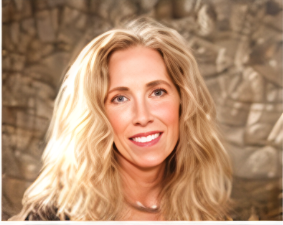
Joy BerryOur summary
Supports term limits and Measure E; did not separately explain whether Laguna should adopt district elections or a runoff system.
Read full answer verbatim
“I support term limits and Measure E.”
Written response · answer only
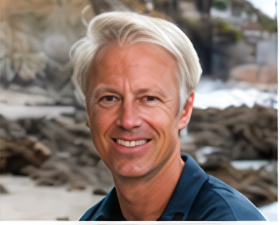
Nick AronoffOur summary
Comfortable with Laguna’s citywide at-large system and cautious about districts; open to improvements but sees no compelling case for replacing the current model.
Read full answer verbatim
“I am comfortable with Laguna Beach’s current at-large election system and would be cautious about moving to district elections.
Laguna is a small city, and I believe every Councilmember should be accountable to every resident, whether they live in North Laguna, the Village, TOW, the Canyon, or South Laguna. Dividing a community of our size into districts could encourage Councilmembers to focus primarily on the interests of one geographic area rather than making decisions for the city as a whole.
I would be open to reviewing ways to improve elections, but I have not seen a compelling reason to replace Laguna’s citywide system with districts.”
Written response · answer only
Alex RounaghiOur summary
Prioritizes a 24-hour ambulance-receiving ER with a licensed hospital attached; would evaluate operators, land-use leverage and coordination with the Attorney General.
Read full answer verbatim
“My minimum is a 24-hour emergency department in Laguna Beach that can receive ambulance transports. Six in ten of our ambulance transports go to that campus. Under state law an emergency department cannot stand alone, so keeping the ER means keeping a licensed hospital of some size attached to it. Ensuring access to emergency care has been my highest priority and will continue to be if I'm re-elected.
In August, Providence agreed to study a smaller hospital that preserves an emergency room. A study is not a commitment, and I've said that publicly.
As I said during the debate, all options are on the table. We have looked closely at our leverage, including land use. We also are talking to other operators, and most importantly, having close coordination with the Attorney General's office.”
Written response · answer only
Ashley CintasOur summary
Prioritizes local 24/7 emergency treatment and inpatient care if independently shown feasible; supports pursuing alternative operators, sites and funding while negotiating with Providence.
Read Ashley’s complete responses verbatim ↗
Read full answer verbatim
“My minimum is 24/7 local emergency access with stabilization, diagnostics and the ability to treat and discharge patients locally. I also want inpatient acute care preserved if an independent analysis shows a workable model. The City should immediately pursue a parallel path: obtain independent financial and facility data, issue a request for information to qualified operators, evaluate the existing property and other sites, and identify public, private, nonprofit, county and state funding options. We should negotiate with Providence, but we cannot allow one company to be our only plan.”
Written response · answer only
Sue KempfOur summary
Anticipates retaining an ER with some rooms, legislation permitting an ER without a hospital, or another medical institution taking control; expresses confidence in Alex Rounaghi and Bob Whalen’s work.
Read full answer verbatim
“I believe the hospital issue will eventually be resolved by (1) maintaining the E.R. Including a small number of rooms, (2) state law changes allowing E.R. Without a hospital or (3) another medical institution assumes control. I am not working on the subcommittee and I know Alex and Bob will find the best solution.”
Written response · answer only
Edward BayukOur summary
Calls for 24-hour ambulance-receiving emergency care and inpatient acute care; if Providence refuses, seek another operator and evaluate acquisition, including whether eminent domain is lawful and justified.
Read full answer verbatim
“My minimum acceptable outcome is 24-hour emergency care that accepts ambulances, together with inpatient acute care in Laguna Beach. Providence’s recent agreement to study a smaller hospital is a step, but it is not a commitment to provide one. If Providence will not preserve those services, the City should seek another qualified operator and evaluate acquiring the property, including whether “eminent domain” is lawful and justified for this public purpose regarding public safety and public health. Any appraisal and financial analysis must account for necessary building and seismic upgrades. Residents should see the options, costs, and deadlines. I do not want a study or a reassuring announcement to become a substitute for an enforceable outcome.
Providence Hospital recent channel 7 ABC announcement was obvious a public relations announcement in an Election year because of bad press of the two past public meeting with city residents and the obvious intentions of the hospital.”
Written response · answer only
Mark OrgillOur summary
Calls for a best-in-class 24-hour emergency department and meaningful inpatient acute care, while evaluating operators, ownership models, partnerships, sites, legislation, grants and philanthropy.
Read full answer verbatim
“My minimum acceptable outcome is preserving a best-in-class, 24-hour emergency department and meaningful inpatient acute-care capability in Laguna Beach, whether at the existing hospital or through a feasible replacement. An urgent-care center alone is not an adequate substitute for a community with constrained access, millions of annual visitors, and serious wildfire and evacuation risks. The City should continue negotiating with Providence while simultaneously evaluating other operators, nonprofit or public ownership, a healthcare district or joint-powers partnership, alternative sites, state legislative relief, grants, and philanthropy. I would consider voter-approved financing only after independent analysis establishes the community's healthcare needs, seismic and retrofit options, capital and operating costs, and a credible operator. We should act urgently, but we should not promise that the City can operate a hospital without first establishing its medical, legal, and financial feasibility.”
Written response · answer only
Joy BerryOur summary
Points to smaller acute-care hospitals in Catalina Island, South Lake Tahoe and Aspen and says Laguna should understand those economics and pursue a similar model with Providence or another provider.
Read full answer verbatim
“I understand smaller towns such as Catalina Island, South Lake Tahoe, and Aspen CO have been able to have an acute care hospital with fewer beds; we need to understand those economics and have Providence or another health care provider do the same for Laguna”
Written response · answer only
Nick AronoffOur summary
Calls for 24-hour ambulance-receiving emergency care and enough inpatient acute-care capacity to support it; also favors evaluating other operators, legislation and affordable senior housing on the campus.
Read full answer verbatim
“My minimum acceptable outcome is preserving 24-hour emergency care that can accept ambulances, along with sufficient inpatient acute-care capacity to support it. Laguna should not be left with only an urgent-care or outpatient model.
Providence is currently evaluating whether a smaller-scale hospital could preserve a 24/7 emergency department and some acute-care beds. I support aggressively pursuing that option.
If Providence ultimately will not provide it, the city should explore every realistic alternative, including another qualified hospital operator, partnerships with other healthcare systems, land-use and entitlement options, and advocating for state legislation that could allow a standalone emergency department even though that is not currently possible.
I also believe the existing campus is larger than what Laguna may need going forward. As future uses of the property are discussed, affordable senior housing should be part of that conversation as well.
For me, preserving meaningful emergency access in Laguna is the priority.”
Written response · answer only
Alex RounaghiOur summary
Has no specific objection to complete accounting and says costs are public records; does not describe how a consolidated report would be produced.
Read full answer verbatim
“I am all about transparency, so I have no specific objection to this request. These are all public records.”
Written response · answer only
Ashley CintasOur summary
Supports one complete cost accounting, including lost parking revenue, maintenance, authorizations and changes; also wants a review of whether the project met its goals.
Read Ashley’s complete responses verbatim ↗
Read full answer verbatim
“Yes. Residents should receive one complete accounting from the temporary street closure through design, consultants, construction, furnishings, change orders, lost parking revenue and annual maintenance. The City should publish the original budget, every Council authorization, the final cost, funding sources and who approved each material change. A project cannot be judged responsibly when costs are scattered across years and accounts. I would also require a post-project review of whether the Promenade met its stated goals and what should be corrected.”
Written response · answer only
Sue KempfOur summary
Says all Promenade costs and increased sales-tax revenues are public records; does not explicitly commit to one consolidated accounting.
Read full answer verbatim
“All of the costs pertaining to the promenade, including increased sales tax revenues are public record”
Written response · answer only
Edward BayukOur summary
Supports a complete accounting including staff, consultants, drawings, contracts, legal costs, lost parking revenue, trees, funding and maintenance.
Read full answer verbatim
“Yes. I want one public accounting covering the temporary closure, staff time, SWA and other consultants, construction drawings, contracts, change orders, legal expenses, lost parking revenue, funding sources, approval dates, and ongoing maintenance. It should explain the decisions and costs associated with removing and replacing the Forest Avenue trees. I also want the City to identify when it first learned of the trees’ root and health problems and what could have been discovered before construction. Common sense should have realized if you dig up the whole street you would lose most of the trees hence why Ocean and Beach redevelopment should not happen now after learning a sad serious lesson from Forest Avenue construction. Finally, residents deserve a clear explanation of the timing, necessity, and approval of the approximately $325,000 in additional SWA drawing costs that I have questioned.”
Written response · answer only
Mark OrgillOur summary
Supports a complete accounting while also documenting what the community received and distinguishing Promenade costs from work required regardless of the project.
Read full answer verbatim
“Yes. I support one complete public accounting of Promenade-related expenditures. It should separately identify the temporary pandemic-era closure, permanent design and construction, infrastructure, furnishings, maintenance, lost meter revenue, grants and restricted funds, and work that would have been required regardless of the Promenade. It should include approved budgets, contracts, change orders, credits and the final project cost. That accounting should also explain what the community received. The Promenade grew from the community-driven Vision Laguna 2030 effort and its call for a more pedestrian-oriented downtown. From time to time, I hear that we could have retained vehicle traffic while adding parklets for expanded outdoor dining. While that hybrid approach would have provided dining space, it would not have created a complete promenade: a community social and gathering space free from automobiles and the noise, congestion and safety risks of vehicle traffic. Residents deserve both the complete numbers and the complete context.”
Written response · answer only
Joy BerryOur summary
Supports a thorough cost accounting, including lost parking revenue.
Read full answer verbatim
“Yes the residents deserve a thorough detailed cost outline along with lost revenue from the parking too”
Written response · answer only
Nick AronoffOur summary
Supports one easy-to-read report covering planning, temporary operations, construction, changes, trees, furnishings, attributable staff costs, funding and continuing costs.
Read full answer verbatim
“Yes. I support one complete, public accounting of every Promenade-related cost.
From the planning design phase to the temporary closure and interim operation, final construction, change orders, furnishings, tree removal, landscaping, staff costs where reasonably attributable, and ongoing maintenance and replacement costs.
The city has publicly stated that the permanent Promenade budget is $7.2 million. As of this writing, it was alleged to be $500k under budget. Residents would like to see those details.
We should not have to search through multiple budgets, contracts and staff reports to understand what the project ultimately cost. I would support putting the full accounting in one clear, easy-to-read public report showing the original estimates, actual expenditures, funding sources and continuing annual costs.
Regardless of whether someone supports or opposes the Promenade, basic transparency requires knowing the complete cost.”
Written response · answer only
Alex RounaghiOur summary
Opposes a restaurant tax; favors higher parking rates, a roughly 500-meter South Laguna pilot, and outside public funding.
Read full answer verbatim
“I'm not supportive of a special tax aimed at restaurants. I rejected this approach in 2024 and 2026. My conclusion is that it would ultimately hurt residents by deterring restaurants from opening.
95% of our visitors do not stay at our hotels and pay transient occupancy tax. We should always be looking to capture funds from visitors, which is why I'm supportive of our work to get Coastal Commission approval for an increase in our parking rates and a pilot to add approximately 500 paid parking meters in South Laguna.
I will continue working to maximize the revenue from visitors via parking revenue.
I would also keep pursuing county, state and federal money for the services visitors use.”
Written response · answer only
Ashley CintasOur summary
Opposes a restaurant tax; favors peak parking rates, stronger collection and enforcement, appropriate user fees and review of hotel-tax structures, tied to measurable visitor costs.
Read Ashley’s complete responses verbatim ↗
Read full answer verbatim
“No. A special restaurant tax would also be paid by residents and would weaken local businesses. Visitors should contribute more directly through tools tied to visitor demand and cost. I support data-based peak parking rates in the highest-demand areas, stronger collection and enforcement, appropriate event and user fees, and a review of hotel tax and assessment structures. Any additional revenue should be dedicated and reported publicly for beach maintenance, restrooms, traffic management, transit and public safety. The City should first combine current parking, traffic, lodging and visitor data so the charge is connected to a measurable cost.”
Written response · answer only
Sue KempfOur summary
Opposes increases in TOT, sales and gross-receipts taxes; favors stewardship communication and increased enforcement.
Read full answer verbatim
“I do not support increasing TOT, sales or gross receipts tax. Sales and gross receipts taxes will impact residents. TOT tax increase will not be supported by the hotels and hotel guests contribute significantly to our economy. The best way to manage the visitor impacts is to continue to communicate our stewardship platform and increased enforcement.”
Written response · answer only
Edward BayukOur summary
Opposes a restaurant tax; favors reviewing visitor-area parking rates, enforcement and locations, plus possible transferable guest permits for affected households.
Read full answer verbatim
“I oppose a special tax on restaurants. They serve residents throughout the year and should not bear the City’s visitor costs alone. I would review parking meter rates, enforcement, and locations, particularly in heavily visited beach areas, so visitors contribute more directly. I would also explore two transferable guest parking permits for each eligible household in affected residential areas, subject to a workable program and protection against misuse. The City should publish an estimate of tourism-related public costs and show how much additional parking revenue these changes could reasonably produce.”
Written response · answer only
Mark OrgillOur summary
Opposes a restaurant-only tax; supports peak-period visitor parking rates and market-based fees for exclusive commercial use of public space.
Read full answer verbatim
“I would not support a special tax imposed only on restaurants. Residents patronize our restaurants, and many local establishments already operate on narrow margins. I do believe visitors should contribute more toward the services their presence requires. I support peak-period visitor parking rates, while preserving meaningful resident parking benefits, and fair market-based fees for exclusive commercial use of public space. Revenue generated from those sources should be transparently dedicated to visitor-related costs such as public safety, marine safety, sanitation, transportation, parking management and environmental stewardship. I also helped redirect approximately $500,000 annually from tourism promotion toward City stewardship. The principle should be simple: identify costs created by visitor volume, use lawful revenue mechanisms that most directly reach visitors, protect resident-serving businesses, and publicly report how the money is spent.”
Written response · answer only
Joy BerryOur summary
Opposes burdening struggling small businesses and favors summer surge pricing at parking meters.
Read full answer verbatim
“All small businesses are struggling today with technology taking away the lions share of revenue and we cannot impact these small operations. The best direct offset to day visitors is via our parking with surge meters during the summer months.”
Written response · answer only
Nick AronoffOur summary
Opposes a restaurant tax; would first examine TOT, parking revenue, enforcement and the effectiveness of current tourism-related spending.
Read full answer verbatim
“No. I do not support placing a special additional tax on restaurants. Our local restaurants already face high operating costs, and I do not think the city should make it harder to run a local business to address visitor impacts. This is the wrong approach.
If additional visitor-generated revenue is needed, I would first look at sources more directly tied to visitors, including TOT, parking revenue, and increased enforcement. I would also look at whether existing tourism-related revenues are being spent as effectively as possible before asking anyone to pay more.
Visitors should contribute a greater share of the costs they generate, particularly for beach management, sanitation, public safety, parking, transportation, and infrastructure. The goal should be to connect the revenue source as closely as possible to the people creating the demand, rather than placing another broad burden on local businesses and residents.”
Written response · answer only
Alex RounaghiOur summary
Open to a live neighborhood exercise after consultation with Fire and Police Chiefs; gives no deadline.
Read full answer verbatim
“I am open to this and would want to consult with our Fire and Police Chiefs on the best way to implement these exercises. I'm open to all options to prepare for future wildfire/evacuation.”
Written response · answer only
Ashley CintasOur summary
Supports an evacuation-zone pilot within six months of taking office and a phased citywide exercise in the first year, with published failures and corrective actions.
Read Ashley’s complete responses verbatim ↗
Read full answer verbatim
“Yes. A tabletop exercise is useful, but it does not show whether alerts reach people, intersections move, evacuation routes work or backup communications hold up under pressure. I would require a neighborhood or evacuation-zone pilot within six months of taking office and a phased citywide exercise during the first year, coordinated with police, fire, public works, schools and regional partners. The results should be published, including failures, corrective actions, responsible departments and deadlines. Prepared is not the same as tested.”
Written response · answer only
Sue KempfOur summary
Describes live evacuation exercises as difficult to coordinate and simulate, citing discussions with Fire and Police; supports tabletop preparation and circumstance-specific directions.
Read full answer verbatim
“It would be very difficult to conduct a live evacuation because of the problems with coordination (people trying to get home or out of town, etc,), managing traffic lights on the canyon and Coast Highway, etc. In an actual evacuation scenario, we would change the signaling on the major thoroughfares, depending on the direction of the fire. The reason we have table top exercises is to get people thinking about what they should do. The fire department and Police Department will give specific directions based on the circumstances in the event of a fire. I have asked both the FD and PD about live rehearsals and they view it as problematic and difficult to simulate.”
Written response · answer only
Edward BayukOur summary
Supports a real neighborhood wildfire-evacuation exercise by August 2027 and public reporting of lessons learned.
Read full answer verbatim
“Yes. Laguna should hold a real neighborhood wildfire-evacuation exercise by August 2027. It should test phone alerts, outdoor warning systems, evacuation routes, blocked roads, and assistance for residents who need help. We should verify how warnings and communications function during a power outage, then publish what the exercise teaches us.
I also want a public accounting of the approximately $850,000 I understand was spent on the emergency operations facility at the Community and Recreation Center. The City should explain why that investment was chosen and compare its capabilities and costs with a fully operational “mobile command center” that could operate where an emergency occurs or could be moved anywhere in the city North Laguna, South Laguna, Top of The World. Taxpayers deserve to see the operational reasons for the choice.”
Written response · answer only
Mark OrgillOur summary
Supports professionally recommended testing within 12 months and before peak 2027 fire season, with public documentation of failures and corrective measures.
Read full answer verbatim
“I support the City using the most effective professionally recommended process within the next 12 months and before the peak 2027 fire season to ensure that an actual emergency evacuation would be as safe, orderly and seamless as possible. That may include neighborhood evacuation exercises, phased drills, evacuation modeling, communications testing or a combination of approaches. The appropriate methods should be determined by our Fire and Police departments in consultation with emergency-management professionals. The process should test notifications, traffic control, evacuation routes, emergency-vehicle access, backup communications, assistance for residents with mobility or transportation needs, and regional coordination. Results should be documented publicly, including identified bottlenecks, communication failures, corrective measures, responsible departments and completion dates. The purpose is to learn what works, identify weaknesses and improve our readiness before an actual emergency.”
Written response · answer only
Joy BerryOur summary
Supports separate neighborhood exercises for areas such as TOW, Arch Beach Heights, the Canyon, North Laguna, South Laguna and the Village; gave no date.
Read full answer verbatim
“I think an exercise, neighborhood by neighborhood would be wise as each one may have a different exit route or safe place. A city-wide one would be challenging and a separate one for TOW, ABH, the canyon, north, south, village and take area by area with actual exercise could be very beneficial.”
Written response · answer only
Nick AronoffOur summary
Supports a controlled neighborhood pilot within one year and a public after-action report identifying bottlenecks and fixes.
Read full answer verbatim
“Yes. I would support an actual neighborhood focused wildfire-evacuation exercise. After hearing the issues from residents living in Arch Beach Heights and their difficulties evacuating, I believe we need to take further measures. Laguna has already held neighborhood preparedness workshops and updated evacuation maps, which is useful, but a live exercise would test what happens when residents, traffic, alerts, police, fire, and limited evacuation routes all interact in real time.
I would want a controlled pilot exercise within the next year, followed by a public after-action report identifying bottlenecks and specific fixes.
I also think our broader emergency preparedness needs to be more proactive. The city did not declare its El Niño-related local emergency until September 10, after significant coastal erosion and damage had already occurred. We should be preparing earlier for predictable seasonal risks such as wildfire, flooding, mudslides, storm drains, coastal erosion. We should not wait until the problem is already at our doorstep.”
Written response · answer only
Alex RounaghiOur summary
Cites $1.5 million in prior cuts, including seven positions, and supports further cuts; names no new specific expenditure or service trade-off.
Read full answer verbatim
“I support doing this and have already done it. As part of our comprehensive efficiency initiative, we identified $1.5 million in cuts (including eliminating 7 positions). We need to continue to make more cuts to ensure long-term fiscal sustainability, allowing us to continue investing in needed public safety and infrastructure investments.”
Written response · answer only
Ashley CintasOur summary
Would cut outside professional services by at least $500,000 and pause non-emergency studies; targets about $2 million in recurring savings or cost avoidance in the first budget cycle.
Read Ashley’s complete responses verbatim ↗
Read full answer verbatim
“I would pause new non-emergency consulting studies and reduce outside professional-services spending by at least $500,000 while the City inventories current contracts, duplicate studies and unused software. The tradeoff is that some discretionary studies and lower-priority initiatives would take longer. Police, fire, lifeguards, wildfire work and essential maintenance would be protected. This is one part of my larger first-budget-cycle goal of identifying approximately $2 million in recurring savings or cost avoidance through contract review, vacancy control, project prioritization and monthly budget-to-actual management.”
Written response · answer only
Sue KempfOur summary
Would improve investment returns, evaluate contracts by outcomes and review the capital plan before cutting services; identifies no specific reduction or savings amount.
Read full answer verbatim
“I would continue to increase our investment portfolio returns as we have done with Meeder Investments, look at existing contracts and evaluate them based on outcomes vs. simply costs, review and scrub our capital plan each year before I would cut any services.”
Written response · answer only
Edward BayukOur summary
Would postpone approximately $500,000 in discretionary Ocean Avenue and Beach Street streetscape work while preserving safety and accessibility work.
Read full answer verbatim
“Before supporting a new tax or fee, I would propose postponing approximately $500,000 of discretionary Ocean Avenue and Beach Street streetscape work, subject to identifying what remains uncommitted. Residents would wait for some visual and pedestrian upgrades; I would preserve essential safety and accessibility work. I have urged Public Works to study Seal Beach’s Main Street tree planters(triple in size) and level sidewalks (no tripping hazards) before Laguna repeats designs that may create maintenance or trip hazards on Ocean and Beach development project.
I also want stronger financial oversight by staff with “accounting expertise” and a clearer review of project bids. If a first round of bids is unreasonable, the City should consider revising the scope and bidding again where practical.
A proper city audit committee needs to have at least one person with accounting background to operate correctly.”
Written response · answer only
Mark OrgillOur summary
Would target several hundred thousand dollars in annual savings by reducing outside legal and consulting work, accepting slower timelines for lower-priority studies.
Read full answer verbatim
“Before supporting a new tax or fee, I would continue reducing reliance on outside legal and consulting services, targeting savings of several hundred thousand dollars annually as appropriate work moves to our in-house Legal Department and qualified City staff. The tradeoff would be fewer outside-consultant hours and potentially longer timelines for lower-priority studies; specialized legal and technical expertise would still be retained when necessary. I would also require a five-year financial forecast and a review of vacancies, contracts and the timing of discretionary capital projects before asking residents for additional revenue. Essential public safety, infrastructure maintenance and direct resident services should be protected. Responsible budgeting does not mean selecting an arbitrary essential service to eliminate before the purpose and amount of a proposed tax are known. It means demonstrating that efficiencies and lower-priority spending have been addressed first.”
Written response · answer only
Joy BerryOur summary
Would drop the proposed Caltrans Canyon takeover; did not provide an approximate savings amount or identify the benefit residents would forgo.
Read full answer verbatim
“Taking over the canyon from Caltrans should be dropped once and for all”
Written response · answer only
Nick AronoffOur summary
Would pause the Ocean Avenue and Beach Street streetscape and target $2 million in consultant and outsourced-service savings in 2027, then roughly $500,000 annually for four years.
Read full answer verbatim
“I am not in support of an increased taxes on residents or small businesses. I would first postpone discretionary capital projects that are not essential to public safety or critical infrastructure.
One example is the Ocean Avenue and Beach Street streetscape project. As of this writing, the project is paused but they are still moving forward on reviewing the intersection of Beach & Ocean for traffic calming. The final construction cost has not yet been established. I would pause it before committing additional construction dollars and reassess whether those funds are better directed toward storm drains, roads, sewer infrastructure, or other core needs.
We can look at making the Laguna Local more efficient, possible receiving funds from the school district to support the costs associated with students using the Laguna Local service to get home from school. I would set a goal of saving approximately $2 million on consultant and outsourced services in 2027, followed by additional reductions of roughly $500,000 per year over the next four years.
Before asking taxpayers for more, I believe the city should show that it has prioritized necessities over discretionary projects.”
Written response · answer only
Alex RounaghiOur summary
Prioritizes emergency care, wildfire mitigation, law enforcement, water and wastewater projects, fiscal balance, permit review and local character; most fears losing the ER.
Read full answer verbatim
“Laguna's next 10 years:
• Retaining access to emergency services
• Continuing to invest in state-of-the-art wildfire mitigation
• Fully funding law enforcement to mitigate visitor impacts and remain the safest coastal city in Orange County
• Water independence (through the Fountain Valley/Newport groundwater well project and potentially Doheny Desalination, which we are still evaluating)
• Successful implementation of the Wastewater Master Plan to mitigate sewer spills; implementation of plan to modernize the Coastal Treatment Plant, allowing us to reduce the amount of treated wastewater going into the ocean. Ocean water quality is critical.
• Structurally balanced budget that allows for long-term fiscal stewardship
• Streamlined review of permits for residents and small businesses
• Maintaining local control (via the Housing Element) to preserve the small-scale character and built environment that defines Laguna
• Protecting our open space and add to it
What I would fear most is losing the emergency room. Once an ER closes it does not come back, and the next several decades of this town would be shaped by that one fact. That’s my main goal to continue working on if re-elected.”
Written response · answer only
Ashley CintasOur summary
Wants tested evacuation, dependable emergency care and infrastructure delivered on schedule; fears gradual erosion of safety, finances and community character through unfinished priorities.
Read Ashley’s complete responses verbatim ↗
Read full answer verbatim
“I would be proudest if Laguna could prove that its critical systems work: a citywide evacuation system tested and corrected, dependable local emergency care, and infrastructure projects funded and delivered on schedule. That would mean replacing promises with measurable results. If I am not elected, my greatest fear is slow erosion rather than one dramatic event: losing emergency care, postponing wildfire readiness, allowing operating deficits to become normal and spending heavily without finishing core projects. Over time, that would reduce both residents' safety and the character we are trying to protect.”
Written response · answer only
Sue KempfOur summary
Envisions wildfire safety, walkability, climate action, thriving businesses, Hotel Laguna restoration and a robust ER; fears SB 9 lot splits and greater density.
Read full answer verbatim
“A city that has not experienced a major wildfire and has continued to take smart steps to address and respond to the ongoing threat. A more walkable town with less cars. Climate change impacts as lessened because all levels of government are working to together (I know this is unlikely but a girl can hope!). A thriving business community with a good balance of offerings. The hotel Laguna finally brought back to its glory days. We have a robust E.R. In town to serve our community in whatever configuration works for us.
Conversely, if you are not elected, what change—or loss—would you most fear seeing in Laguna, and why? Many single family lots split (SB 9) and the town becomes overly dense. Our population has remained stable for many years.”
Written response · answer only
Edward BayukOur summary
Prioritizes financial transparency, infrastructure and protection of Laguna’s character; fears piecemeal development while sewer and fire-safety needs remain unresolved.
Read full answer verbatim
“I would be proudest if residents could say the City had become more transparent about its finances and decisions, repaired essential infrastructure, and protected Laguna’s character. That requires reliable records, careful spending, and listening before making lasting changes.
Open-space issues affect more than Laguna Canyon. They include areas throughout the City, including the litigation involving the Dorin Investment Group after its reported purchase of approximately 11 lots near the Rim Rock Canyon area in November 2022. Because of the complexity and sensitivity of these matters, I recommend that the City consider hiring independent, outside investigators with relevant federal investigative and forensic-computer expertise. Their role would be to conduct an impartial audit of electronic records and decision-making processes across appropriate City departments, including Planning and Community Development and, if legally authorized and necessary, the Police Department.
The purpose would not be to presume wrongdoing or target any individual. It would be to determine whether records were altered, whether required procedures were followed, and whether any misuse of authority, conflicts of interest, or inappropriate “quid pro quo”, arrangements occurred in the past or are occurring now. Any investigation should be conducted under clear legal safeguards, with appropriate protection for confidential information and a public report of its findings.
If I am not elected, I fear that piecemeal decisions could change downtown and our neighborhoods beyond recognition while sewer and fire-safety needs remain unresolved. I am hopeful that emerging technologies of fire-detection, communications, and firefighting tools will help protect homes and open space. We should evaluate those tools carefully and work toward making Laguna safer and more insurable, without assuming that technology alone can eliminate wildfire risk. At the same time, we should not allow fear to drive our decisions, because fear can lead to rushed or misguided choices. Laguna needs thoughtful, fact-based decisions that protect residents without sacrificing sound judgment.”
Written response · answer only
Mark OrgillOur summary
Envisions stronger public safety and a stewardship framework protecting neighborhoods, infrastructure, arts, heritage and natural resources.
Read full answer verbatim
“Ten years from now, I would be proudest if Laguna had continued strengthening our Fire and Police services, wildfire prevention, emergency medical response and evacuation readiness while implementing a community-stewardship framework through the General Plan and Local Coastal Program. Built around culture, heritage and the environment, that framework would protect coastal access while safeguarding our neighborhoods, infrastructure, artistic community, historic character and natural resources. My experience as a builder, business owner, civic leader and councilmember, and relationships established locally and with government agencies, give me a distinctive ability to bring people together and move this work from vision to implementation. If I am not elected, I would fear losing that momentum and losing what makes Laguna unique through unmanaged visitor pressure, environmental decline, state mandates, and the displacement of artists, businesses and community institutions. Change is inevitable; losing Laguna's culture, heritage, environment and sense of community is not.”
Written response · answer only
Joy BerryOur summary
Would be proudest of protecting hillsides from development and fears they will disappear if current steep-slope policies continue.
Read full answer verbatim
“Saving our hillsides from development, if not elected I fear they will disappear as the incumbents all voted to ignore the city’s steepness rule preventing building on steep slopes. Incumbents introduced new engineering and science; instead of measuring from top to bottom of slopes they want to measure switchbacks; if they had it their way, El Capitan in Yosemite would be flat and prime for development.
”
Written response · answer only
Nick AronoffOur summary
Wants resident-focused, accountable and financially disciplined government; fears large corporate, hotel and luxury development will displace local businesses and community character.
Read full answer verbatim
“If elected, I would be proudest if my tenure helped preserve Laguna as a community for residents while making City Hall more accountable, financially disciplined, and proactive about the future.
If I were not elected, my greatest concern would be seeing Laguna become increasingly dominated by large retail and hotel corporations and high-end development while the small boutiques, galleries, restaurants, and locally owned businesses that give the town its character are pushed out.
I would also worry about major properties such as the Ruby’s site turning into a hotel, St. Catherine’s being sold off for housing, and parts of the Canyon being developed primarily for hotels, luxury retail, or other uses that do little to serve residents.
Growth and redevelopment are inevitable, but they should strengthen the community rather than turn Laguna into a destination that increasingly feels designed for visitors instead of the people who live here.”
Written response · answer only
About these summaries: Our summaries aid comparison. Read the full answers before deciding.
Additional written responses · Ashley Cintas
More issues, briefly
Our summaries of her public-question and elective answers. These are separate from the seven principal questions.
Hospital
Would pursue independent financial and seismic reviews and competing operator proposals. Would consider a bond only after a credible service, site and funding plan is public.
Promenade
Wants comparable hybrid and permanent options, published decision and procurement records, safer furnishings, better shade and planting, and documented tsunami evacuation review.
Farmers’ Market / Fire Station 1
Would first study retaining the station at its current location. Wants comparable site costs and a funded plan to preserve a viable year-round market.
Coyotes / Estuary
Favors measurable incident and response standards for Animal Services, plus mosquito and water-quality thresholds, monitoring and intervention before estuary approval.
Parking / Tourism
Favors pricing by demand, stronger resident and employee permits, regional intercept parking study and public reporting of congestion and neighborhood spillover.
Fiscal oversight / Public input
Wants project due diligence, stronger voter safeguards for major irreversible decisions, contract scrutiny, a public question log and an independent resident-services function.
Housing / Environment
Opposes broad Canyon development; favors evidence-based siting, conditional Land Trust support, a coastal sediment assessment and scientifically supported sand replenishment.
Privacy / City decisions
Would restrict camera searches and data sharing, require audits, protect technical decision-making and renew notice and appeals for material project changes.
Campaign funding / Cannabis
Points to public campaign filings and promises a funding-category reconciliation. Open to one regulated dispensary after public input and verified net-revenue estimates.
Read every additional answer verbatim ↗ · Question bank →
In their own words
Complete verbatim submissions
Original wording, punctuation and length are preserved. Formatting labels may be added for navigation.

 Laura Parisi
 Karen Martin